
Rooftop Terrace Design · Luxembourg
From Belair to the Moselle valley
Berlin-based manufactory delivering rooftop terrace concepts to Luxembourg's most discerning heritage villas, Kirchberg European-quarter penthouses and Moselle-valley wine estates, with plant design, outdoor kitchens and wellness architecture under one curatorial hand.
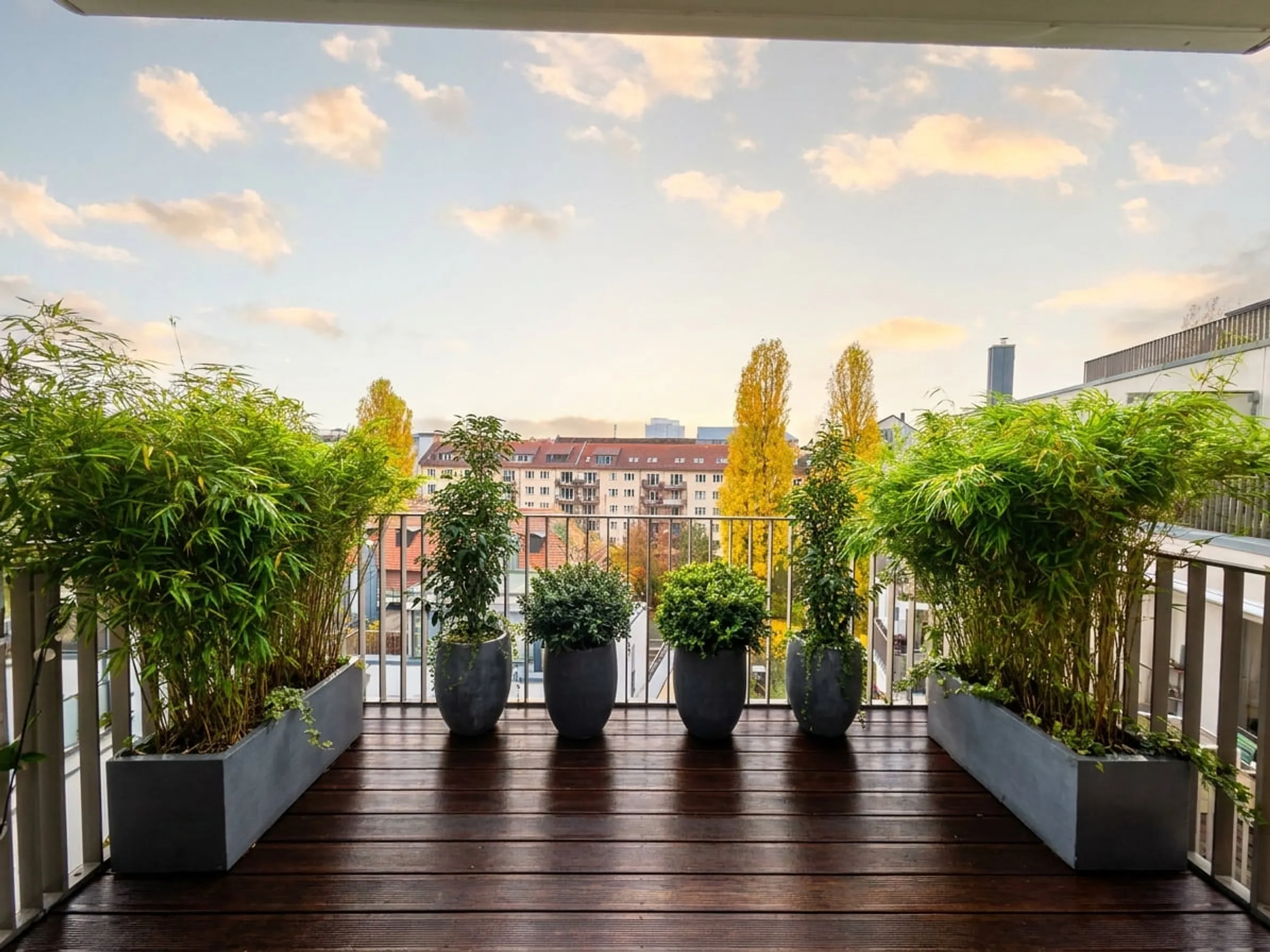
Why Luxembourg is different
EU institutions, fund-management capital, and UNESCO Old Town
Luxembourg is the Grand Duchy at the intersection of three founding EU institutions and the global investment-fund-management capital. Belair and Limpertsberg form the historic HNWI villa belt; Kirchberg anchors the contemporary European-quarter penthouse market; Merl, Strassen, Bertrange and Bridel represent the suburban estate tradition; the Moselle valley adds the wine-estate dimension. Climate is humid continental with Atlantic moderation – warm humid summers, cold wet winters, Atlantic-driven storm fronts. The UNESCO Old Town and Fortifications are protected under strict Sites et Monuments Nationaux review.
We work in this tension daily: with OAI-registered architects and structural engineers, with Ville de Luxembourg Service de l'Urbanisme and Sites et Monuments consultants, and with the lifestyle expectations of Luxembourg clients between Belair and Limpertsberg heritage villas, Kirchberg penthouses, Merl, Strassen, Bertrange and Bridel suburban estates, Clausen Pétrusse-valley residences, plus Moselle-valley wine-estate properties. Our role is the plant and outdoor lifestyle layer – ecological substrate, continental-Atlantic curation, and the wellness elements (sunset terrace, outdoor kitchen, pool deck, pergola) that turn a Luxembourg rooftop into a year-round sanctuary.
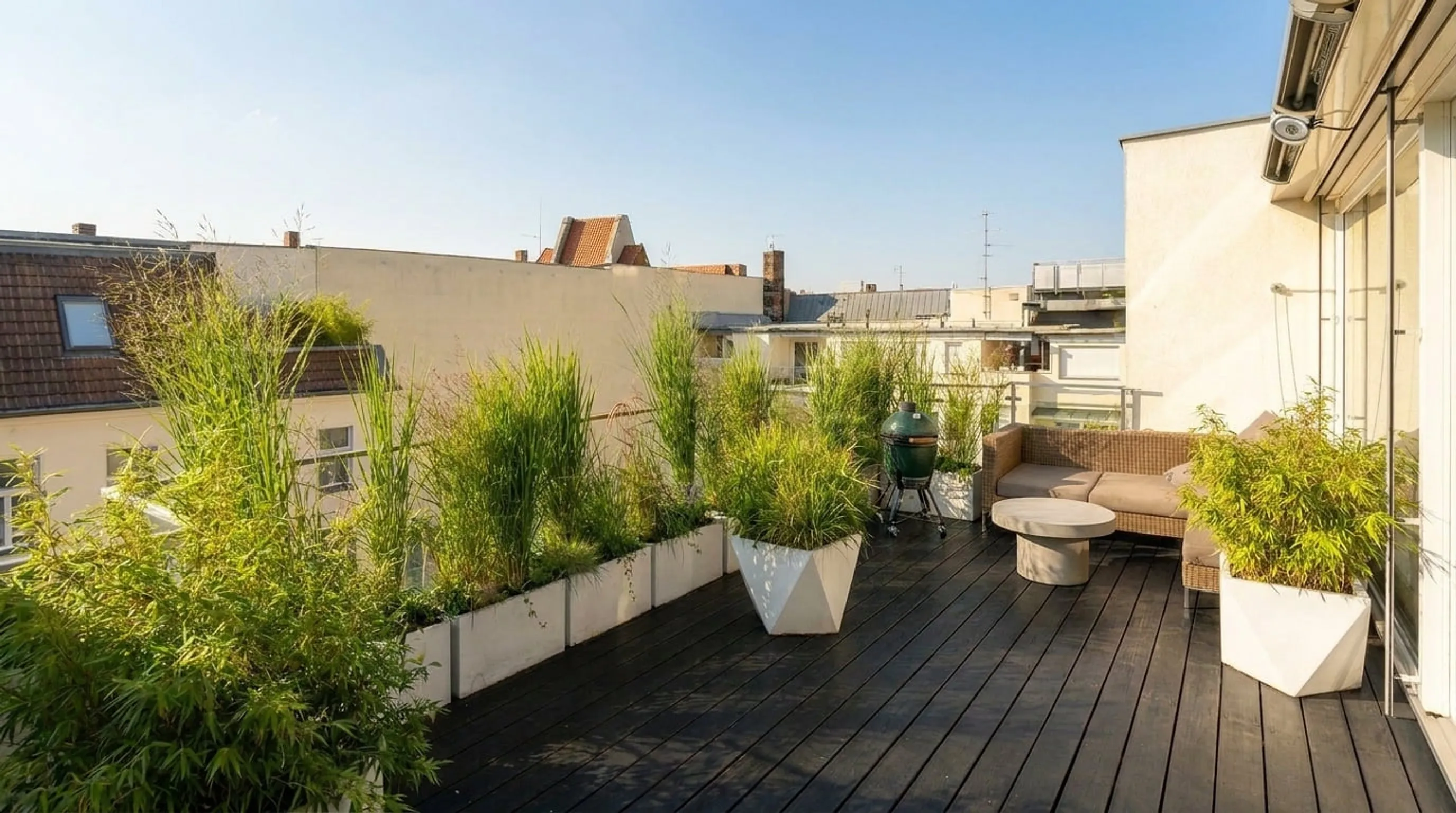
Our Luxembourg approach
Curated plants, ecological substrate, lifestyle integration
- Symbiosis methodology – mycorrhizal partnerships, effective microorganisms and humus building replace chemical fertilisation under four-season cycling and Atlantic humidity.
- Continental-Atlantic palette – structural specimens (oak, beech, hornbeam, magnolia, juvenile linden), Luxembourgish evergreens (boxwood, holly, yew, ivy), flowering accents (hydrangea, peony, rose, wisteria, jasmine), Mediterranean accents, Moselle vine and espalier traditions.
- Wellness architecture – sunset terrace, outdoor kitchen, pool deck and pergola integration with Pétrusse, Alzette or Moselle framing.
- UNESCO-aware execution – OAI-registered architects and structural engineers, Ville de Luxembourg permitting, Service des Sites et Monuments Nationaux heritage consent.
Areas we serve
Across Luxembourg City and the Grand Duchy
Most of our Luxembourg work is concentrated in Belair, Limpertsberg, Kirchberg, Merl, Strassen, Bertrange, Bridel, Clausen, Senningerberg and the Moselle valley. We also handle select Esch-sur-Alzette and Mondorf-les-Bains projects.
How a Luxembourg project unfolds
From first conversation to handover
- 01
Understanding before drawing
Site visit (or detailed remote survey for first conversations from Berlin), discussion of the people and rhythm using the terrace, early constraint mapping (Ville de Luxembourg, Sites et Monuments, UNESCO Old Town, structure).
- 02
Concept and curation
A small set of plant compositions, material moodboards, wellness element placement. Always optionality.
- 03
Engineering and approvals
Load calculations with OAI-registered structural engineer, Ville de Luxembourg permitting, Service des Sites et Monuments Nationaux heritage consent.
- 04
Installation and handover
Our team installs on site over one to several weeks. Plants are sourced from Luxembourg-Moselle and Rhineland nurseries and pre-conditioned for the Luxembourg climate. After handover we offer ongoing care subscriptions following the same symbiosis methodology.
Frequently asked
What clients usually want to know first
- Do you work on rooftop terrace projects in Luxembourg?
- Yes. Most of our Luxembourg work is Belair, Limpertsberg, Kirchberg, Merl, Strassen, Bertrange, Bridel, Clausen and the Moselle valley.
- How do you handle UNESCO Old Town heritage review?
- Through experienced OAI-registered architects and Service des Sites et Monuments Nationaux consultants. UNESCO Old Town interventions require especially careful early engagement.
- How long does a typical Luxembourg project take?
- Between four and twelve months from first conversation to handover. Larger Belair or Limpertsberg heritage estates often need eight to fourteen months of planning.
Start a Luxembourg rooftop conversation
The first call is unhurried – understanding before any concept. We travel from Berlin for site visits when the project warrants it.
Get in touch