
Rooftop Terrace Design · Manila
From Forbes Park to BGC
Berlin-based manufactory delivering rooftop terrace concepts to Metro Manila's most discerning Forbes Park gated-community estates and BGC contemporary penthouses, with plant design, outdoor kitchens and typhoon-rated wellness architecture under one curatorial hand.
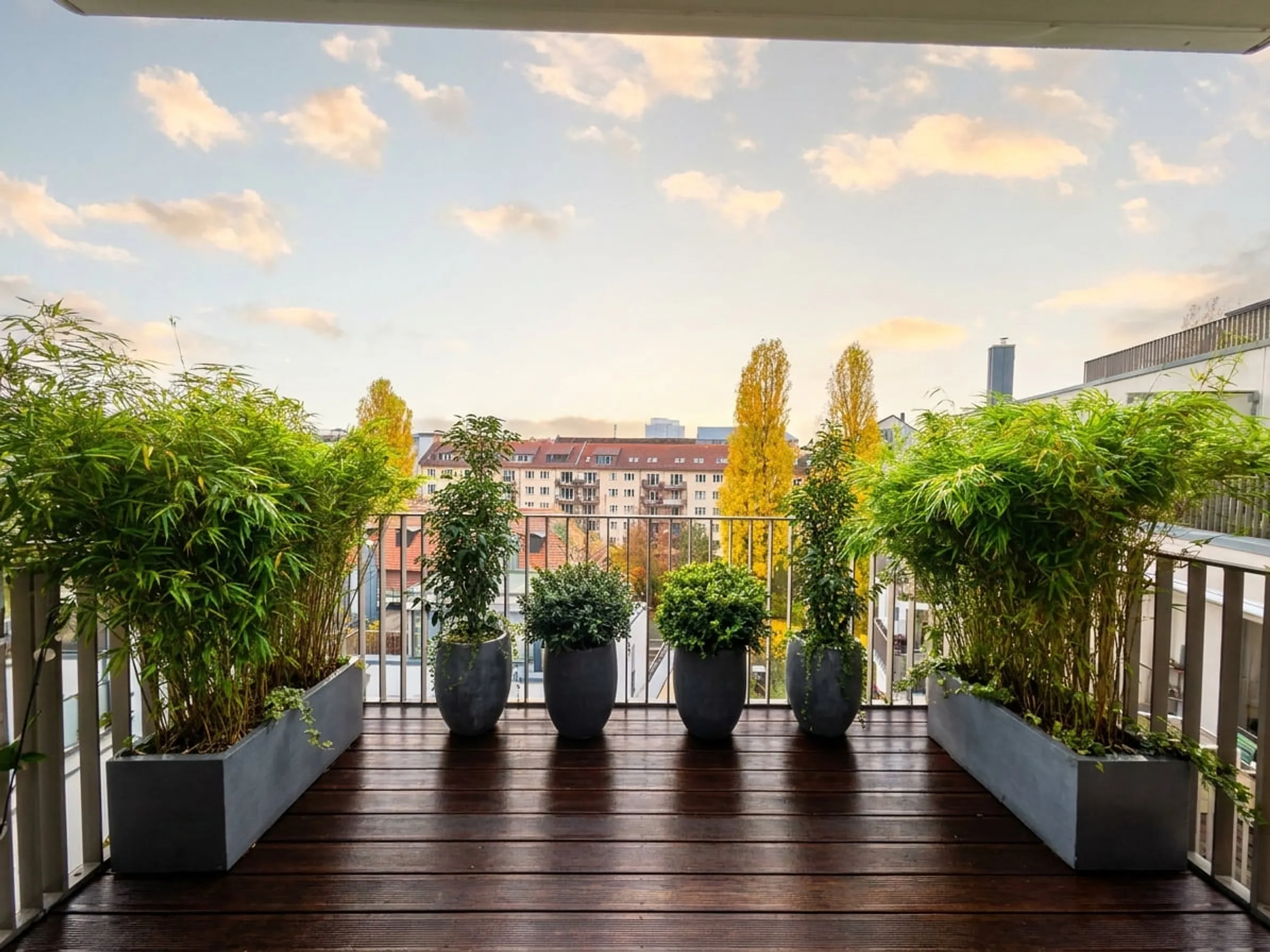
Why Manila is different
Philippine business-family capital, typhoon season, and gated-community tradition
Manila is the Philippine business-family capital, host to the largest concentration of Filipino HNWIs across Ayala, SM, Lopez, Aboitiz, JG Summit and Razon dynasties. Forbes Park (the original 1948 Ayala master-planned gated community), Dasmariñas Village, Urdaneta Village and San Lorenzo Village form the Makati HNWI core; BGC and Makati CBD anchor the contemporary penthouse market; Ayala Alabang adds the southern villa belt; Corinthian Gardens preserves the Quezon City tradition; Tagaytay offers the highland-resort lifestyle. Climate is tropical monsoon with severe typhoon exposure and seismic activity.
We work in this tension daily: with UAP-registered architects and structural engineers, with LGU permitting and gated-community ARB consultants, and with the lifestyle expectations of Manila clients between Forbes Park and Dasmariñas Village estates, Urdaneta Village and San Lorenzo Village villas, BGC and Makati CBD penthouses, Ayala Alabang southern estates, Corinthian Gardens properties, plus Tagaytay highland residences. Our role is the plant and outdoor lifestyle layer – ecological substrate, Philippine tropical curation, and the wellness elements (sunset terrace, outdoor kitchen, pool deck, shaded pavilion) that turn a Manila rooftop into a year-round sanctuary.
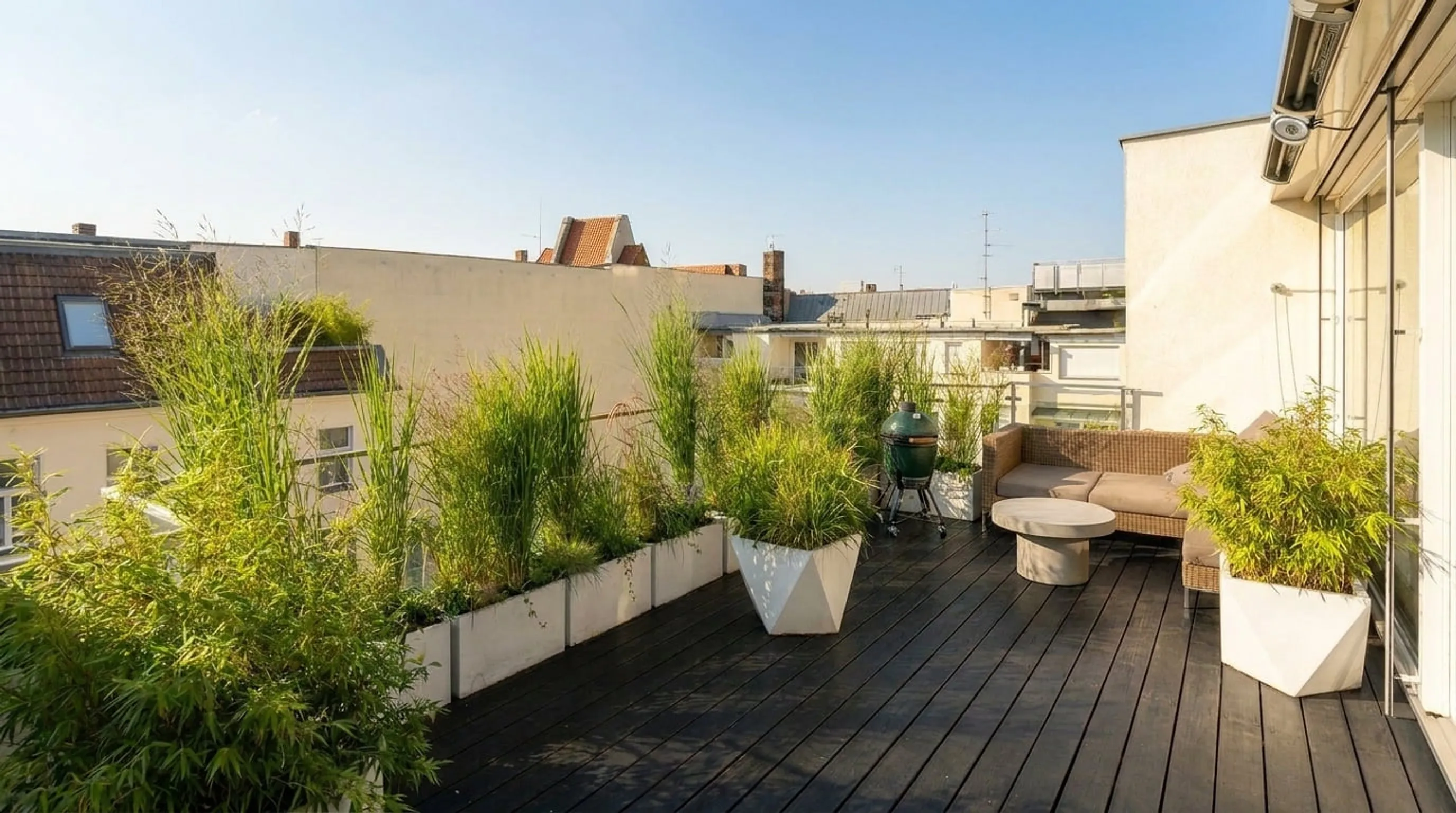
Our Manila approach
Curated plants, ecological substrate, lifestyle integration
- Symbiosis methodology – mycorrhizal partnerships, effective microorganisms and humus building replace chemical fertilisation under tropical monsoon and typhoon stress.
- Philippine tropical palette – structural specimens (coconut palm, royal palm, narra, mahogany, banana), tropical evergreens (Plumeria, Hibiscus, Ixora, Allamanda, Bougainvillea), flowering accents (Philippine orchids, anthurium, heliconia, waling-waling), salt-tolerant succulents.
- Wellness architecture – sunset terrace, outdoor kitchen, pool deck and shaded pavilion integration with Manila Bay or skyline framing.
- Typhoon- and seismic-aware execution – UAP-registered architects and structural engineers, MMDA + LGU permitting, gated-community ARB review, typhoon- and seismic-rated planters and anchoring.
Areas we serve
Across Metro Manila and Tagaytay
Most of our Manila work is concentrated in Forbes Park, Dasmariñas Village, Urdaneta Village, San Lorenzo Village, BGC, Makati CBD, Ayala Alabang, Corinthian Gardens and Tagaytay.
How a Manila project unfolds
From first conversation to handover
- 01
Understanding before drawing
Site visit (or detailed remote survey for first conversations from Berlin), discussion of the people and rhythm using the terrace, early constraint mapping (LGU, ARB, typhoon, seismic, structure).
- 02
Concept and curation
A small set of plant compositions, material moodboards, wellness element placement. Always optionality.
- 03
Engineering and approvals
Load calculations with Philippine-licensed structural engineer, LGU (Makati/Taguig/Muntinlupa/QC) permitting, gated-community ARB review, National Building Code compliance.
- 04
Installation and handover
Our team installs on site over one to several weeks, ideally outside typhoon season. Plants are sourced from Philippine and Southeast Asian nurseries and pre-conditioned for the Manila climate. After handover we offer ongoing care subscriptions following the same symbiosis methodology.
Frequently asked
What clients usually want to know first
- Do you work on rooftop terrace projects in Manila?
- Yes. Most of our Manila work is Forbes Park, Dasmariñas Village, Urdaneta Village, San Lorenzo Village, BGC, Ayala Alabang and Corinthian Gardens.
- How do you handle typhoon season and seismic activity?
- With typhoon-rated planters, seismic-aware structural detailing, salt-tolerant Philippine tropical plant material, and installation scheduling outside the June–November typhoon window.
- How long does a typical Manila project take?
- Between five and fourteen months from first conversation to handover. Larger Forbes Park or Dasmariñas estates often need eight to fourteen months.
Start a Manila rooftop conversation
The first call is unhurried – understanding before any concept. We travel from Berlin for site visits when the project warrants it.
Get in touch