
Rooftop Terrace Design · Muscat
From Al Mouj to Jebel Sifah
Berlin-based manufactory delivering rooftop terrace concepts to Oman's most discerning waterfront residences and villa estates, with plant design, outdoor kitchens, majlis terraces and wellness architecture under one curatorial hand.
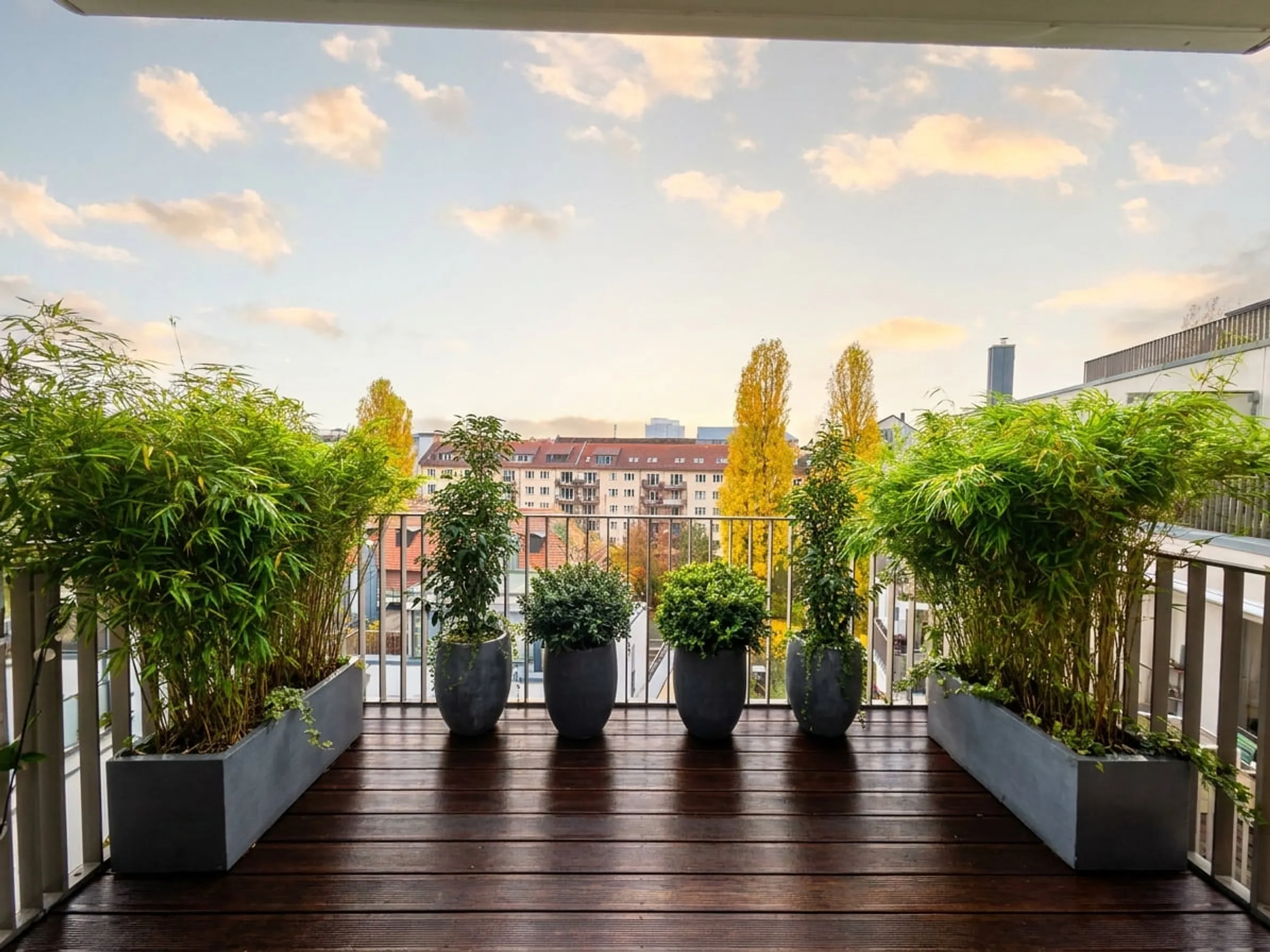
Why Muscat is different
Arabian heat, frankincense culture, and the rhythm of the Sea of Oman
Muscat holds one of the most distinctive architectural identities in the Gulf – the Sultanate's white-walled colour palette is regulated by law, and frankincense (Boswellia sacra) is a UNESCO-protected cultural heritage. Climate is arid Arabian moderated by the Sea of Oman with hot dry summers, mild coastal humidity, intense UV, shamal wind events, salt-laden Indian Ocean air. The Ministry of Housing and Urban Planning and Muscat Municipality govern building and identity preservation.
We work in this tension daily: with Omani-licensed architects and structural engineers, with Ministry of Housing permitting and Omani architectural-identity preservation consultants, and with the lifestyle expectations of Oman clients between Al Mouj waterfront, Qurum and Madinat Qaboos villa estates, Shatti Al Qurum beachfront, Bausher and Al Khuwair private rooftops, Jebel Sifah marina residences, and Salalah monsoon-belt projects. Our role is the plant and outdoor lifestyle layer – ecological substrate, Arabian-Indian Ocean curation, and the wellness elements (majlis terrace, outdoor kitchen, shaded pergola, pool deck) that turn a Muscat rooftop into a year-round sanctuary.
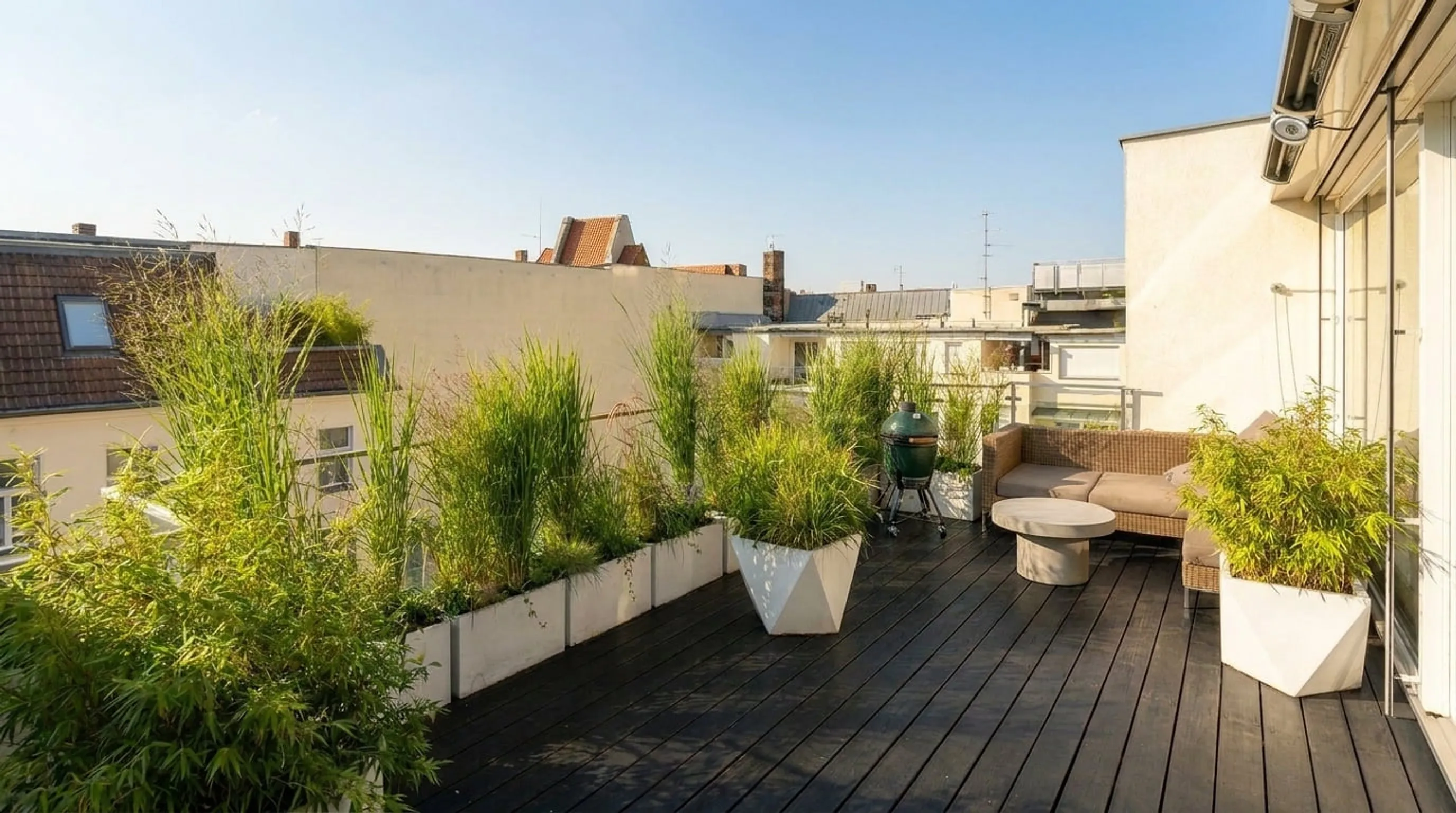
Our Muscat approach
Curated plants, ecological substrate, lifestyle integration
- Symbiosis methodology – mycorrhizal partnerships, effective microorganisms and humus building replace chemical fertilisation under extreme Arabian heat.
- Arabian-Indian Ocean palette – date palm and frankincense-juvenile specimens, heat-tolerant evergreens (oleander, bougainvillea, hibiscus, jasmine, plumeria), Arabian succulents, traditional Omani garden plants.
- Wellness architecture – majlis terrace, shaded pergola, outdoor kitchen and pool deck integration with Sea of Oman or Hajar Mountains framing.
- Identity-aware execution – Omani-licensed architects and structural engineers, Ministry of Housing permitting, Muscat Municipality review, Omani architectural-identity-preserving detailing.
Areas we serve
Across Greater Muscat and the Omani coast
Most of our Oman work is concentrated in Al Mouj, Qurum, Madinat Qaboos, Shatti Al Qurum, Bausher, Al Khuwair, Sifah and Jebel Sifah. We also handle select Salalah monsoon-belt and royal-court projects.
How a Muscat project unfolds
From first conversation to handover
- 01
Understanding before drawing
Site visit (or detailed remote survey for first conversations from Berlin), discussion of majlis rhythm, early constraint mapping (Ministry of Housing, identity preservation, structure, extreme heat).
- 02
Concept and curation
A small set of plant compositions, material moodboards, majlis and wellness element placement. Always optionality.
- 03
Engineering and approvals
Load calculations with Omani-licensed structural engineer (OSE), Ministry of Housing and Urban Planning building consent, Muscat Municipality review.
- 04
Installation and handover
Our team installs on site over one to several weeks, ideally outside June–September peak summer. Plants are sourced from Gulf nurseries and pre-conditioned for Omani heat. After handover we offer ongoing care subscriptions following the same symbiosis methodology.
Frequently asked
What clients usually want to know first
- Do you work on rooftop terrace projects in Muscat?
- Yes. Most of our Oman work is Al Mouj, Qurum, Madinat Qaboos, Shatti Al Qurum, Bausher, Al Khuwair and Jebel Sifah.
- How do you handle Omani architectural identity?
- All visible interventions respect the Sultanate's white-walled colour palette and traditional architectural detailing. Planters, pergola structures and outdoor kitchen casings are designed in muted Omani tones.
- How long does a typical Muscat project take?
- Between five and twelve months from first conversation to handover. Larger Al Mouj or Madinat Qaboos estates often need eight to fourteen months of planning.
Start a Muscat rooftop conversation
The first call is unhurried – understanding before any concept. We travel from Berlin for site visits when the project warrants it.
Get in touch