
Rooftop Terrace Design · Wellington
From Oriental Bay to Martinborough
Berlin-based manufactory delivering rooftop terrace concepts to Wellington's most discerning harbour-front residences and Wairarapa wine-country estates, with plant design, outdoor kitchens and extreme-wind-rated wellness architecture under one curatorial hand.
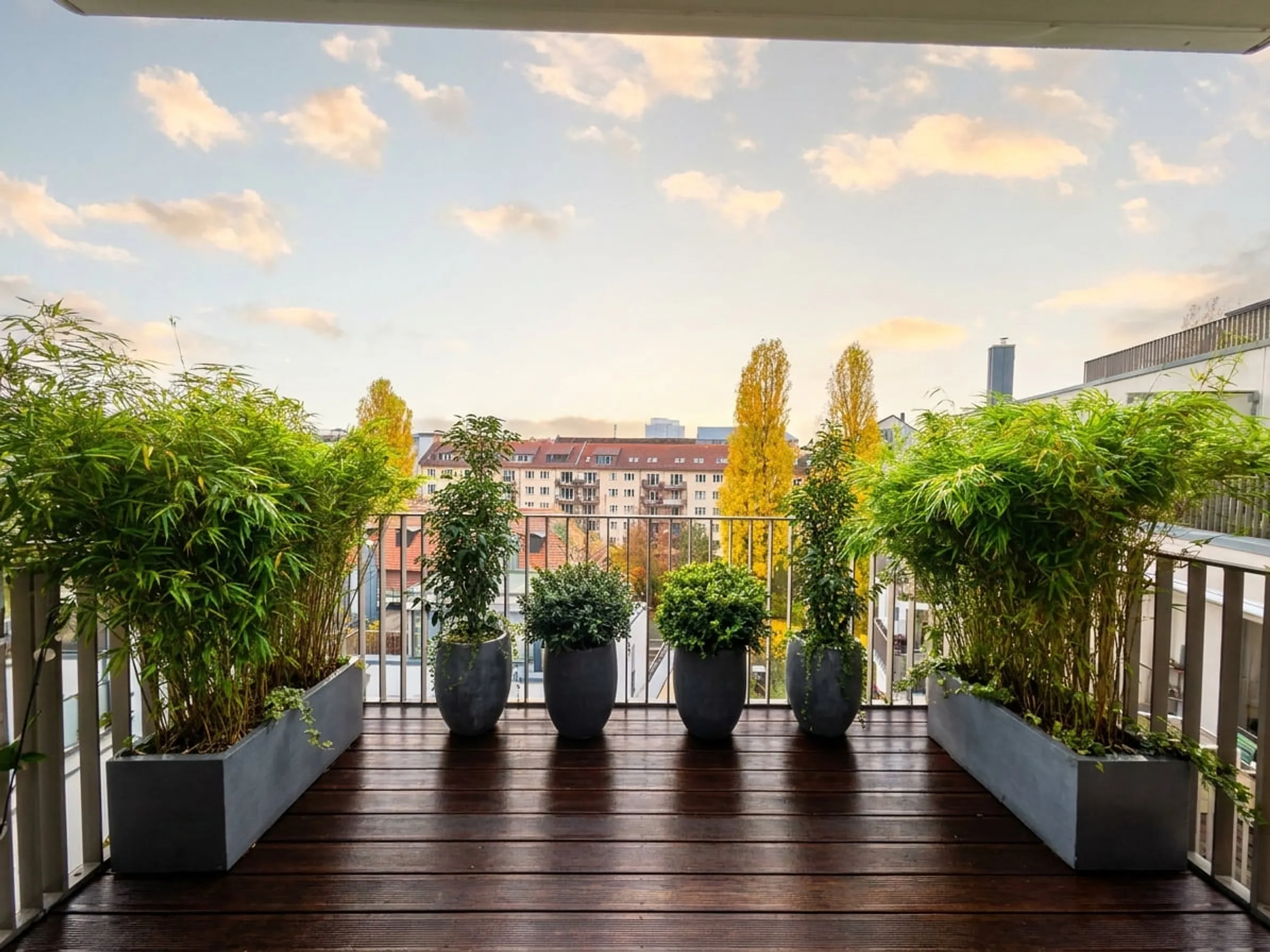
Why Wellington is different
New Zealand capital, Cook Strait wind, and the Martinborough wine tradition
Wellington is the New Zealand capital and the windiest major city in the world – Cook Strait southerlies and northerlies regularly exceed gale force. Oriental Bay forms the iconic harbour-front strip; Roseneath, Karori, Khandallah and Wadestown anchor the hillside HNWI belt; Seatoun and Eastbourne extend the lifestyle to the harbour peninsula; Thorndon preserves the heritage townhouse tradition; Lower Hutt extends to the suburban estate market; Martinborough adds the Wairarapa wine-country dimension. Climate is temperate oceanic with strongest urban wind exposure globally and significant seismic risk.
We work in this tension daily: with NZRAB-registered architects and CPEng structural engineers, with Wellington City Council and Greater Wellington Regional Council consultants, and with the lifestyle expectations of Wellington clients between Oriental Bay and Roseneath harbour-front, Karori, Khandallah and Wadestown hillside villas, Seatoun peninsula estates, Thorndon heritage townhouses, Lower Hutt suburban estates, plus Martinborough Wairarapa wine estates. Our role is the plant and outdoor lifestyle layer – ecological substrate, Cook Strait maritime curation, and the wellness elements (sunset terrace, sheltered outdoor kitchen, sauna pavilion, fire pit) that turn a Wellington rooftop into a year-round sanctuary.
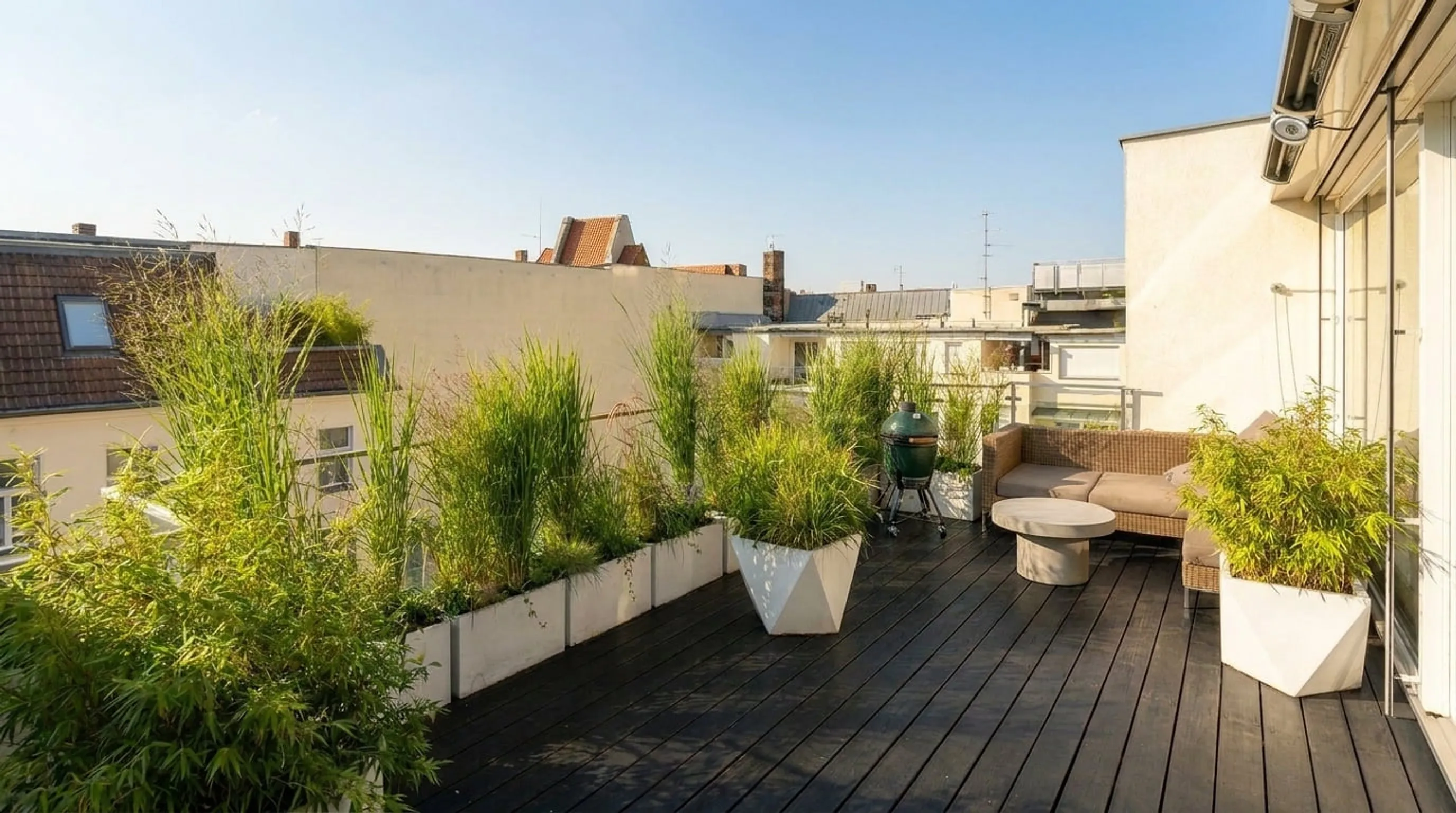
Our Wellington approach
Curated plants, ecological substrate, lifestyle integration
- Symbiosis methodology – mycorrhizal partnerships, effective microorganisms and humus building replace chemical fertilisation under extreme Cook Strait wind, salt and seismic stress.
- Cook Strait maritime palette – structural specimens (Pohutukawa, Puriri, Kauri-juvenile, Nikau palm, Cabbage tree), maritime evergreens (Coprosma, Hebe, Griselinia, Pittosporum, Corokia), flowering accents (Rhododendron, Hydrangea, Magnolia, native rata), New Zealand native plants.
- Wellness architecture – sunset terrace, sheltered outdoor kitchen, sauna pavilion and fire pit integration with harbour or hillside framing.
- Extreme-wind- and seismic-aware execution – NZRAB-registered architects and CPEng structural engineers, Wellington City Council Resource Consent, Building Consent, heritage review for Thorndon, extreme-wind-rated planters and seismic-aware anchoring.
Areas we serve
Across Wellington and the Wairarapa
Most of our Wellington work is concentrated in Oriental Bay, Roseneath, Karori, Khandallah, Wadestown, Seatoun, Thorndon, Lower Hutt and Martinborough.
How a Wellington project unfolds
From first conversation to handover
- 01
Understanding before drawing
Site visit (or detailed remote survey for first conversations from Berlin), discussion of the people and rhythm using the terrace, early constraint mapping (Wellington City Council, heritage, extreme wind, seismic).
- 02
Concept and curation
A small set of plant compositions, material moodboards, wellness element placement. Always optionality.
- 03
Engineering and approvals
Load calculations with CPEng structural engineer, Wellington City Council Resource Consent and Building Consent, heritage review for Thorndon character area.
- 04
Installation and handover
Our team installs on site over one to several weeks. Plants are sourced from New Zealand nurseries and pre-conditioned for the Wellington climate. After handover we offer ongoing care subscriptions following the same symbiosis methodology.
Frequently asked
What clients usually want to know first
- Do you work on rooftop terrace projects in Wellington?
- Yes. Most of our Wellington work is Oriental Bay, Roseneath, Karori, Khandallah, Wadestown, Seatoun, Thorndon and Martinborough.
- How do you handle the world's windiest urban exposure?
- With Cook Strait wind-rated planters, wind-tolerant New Zealand native plant material, sheltered outdoor kitchen integration, and seismic-aware structural detailing.
- How long does a typical Wellington project take?
- Between five and fourteen months from first conversation to handover. Larger Oriental Bay or Seatoun estates often need eight to fourteen months.
Start a Wellington rooftop conversation
The first call is unhurried – understanding before any concept. We travel from Berlin for site visits when the project warrants it.
Get in touch