
Rooftop Terrace Design · Innsbruck
From Saggen to the Nordkette vista
Berlin-based manufactory delivering rooftop terrace concepts to Innsbruck's most discerning heritage villas, alpine HNWI belt and Tyrolean chalet estates – with plant design, outdoor kitchens and snow-rated wellness architecture under one curatorial hand.
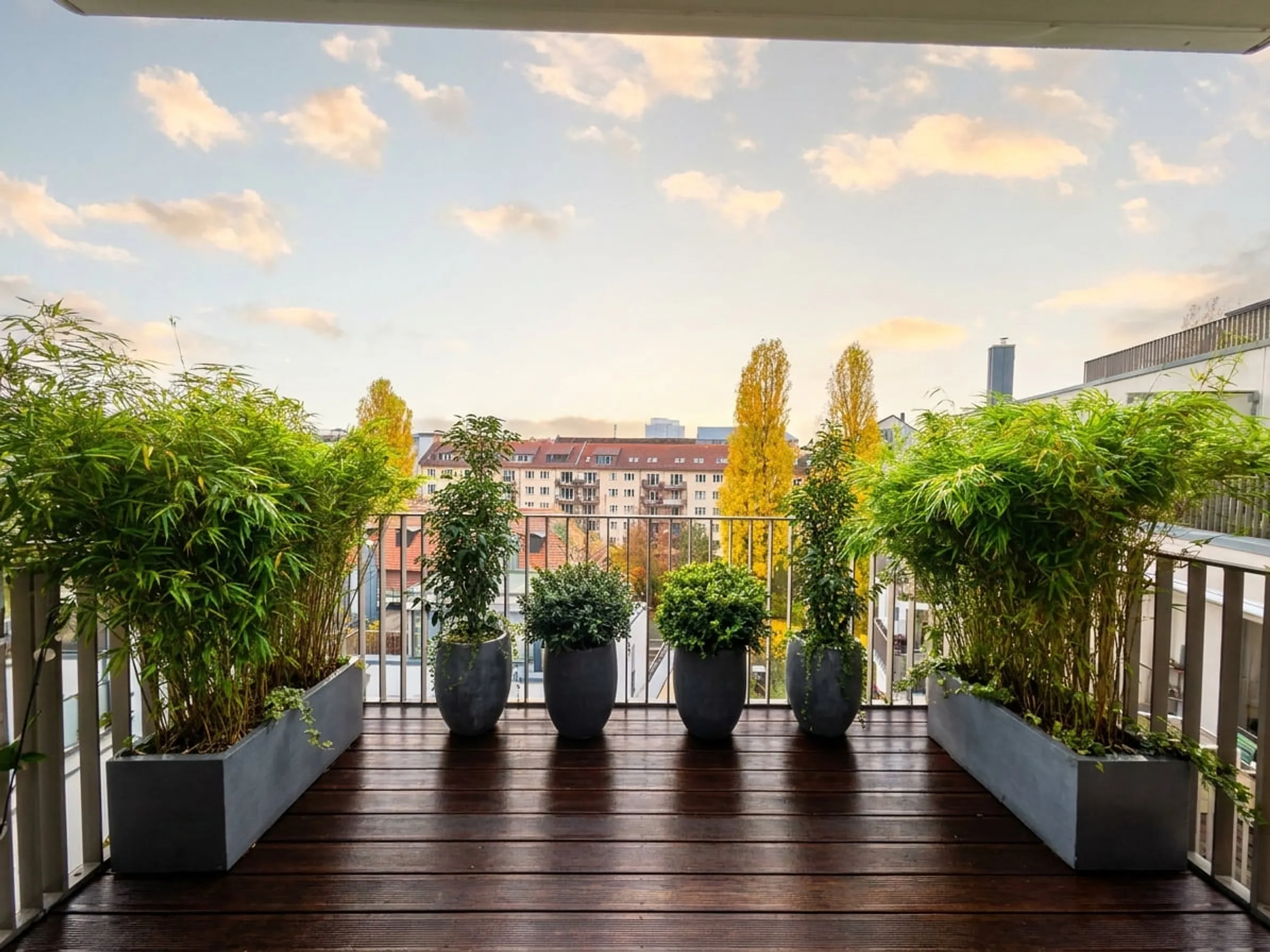
Why Innsbruck is different
Inn-valley basin clarity, Nordkette gravitas, and the Tyrolean altitude discipline
Innsbruck sits in a deep alpine basin between the Karwendel and Patscherkofel ranges, with the Nordkette rising 2.000 metres directly above the city. Saggen forms the historic HNWI villa belt north-east of the river Inn; Wilten anchors the inner-southern penthouse tradition; Höttinger Au represents the post-war villa zone on the west bank; Mühlau and Hungerburg climb into the alpine HNWI belt above 600 metres; Igls and Vill represent the country-chalet tradition at 870 metres on the Patscherkofel flank. Climate ranges from warm summers in the basin to deep continental winters with heavy snow above the city, plus strong foehn wind events in spring and autumn. The Stadt Innsbruck Bauamt and Altstadt-Heritage authorities protect interventions in the Maria-Theresien-Straße quarter and the medieval Old Town.
We work in this tension daily: with Tyrolean architects and structural engineers, with Stadt Innsbruck Bauamt and Altstadt-Heritage consultants, and with the lifestyle expectations of Innsbruck clients between Saggen heritage villas, Wilten penthouses with Nordkette vistas, Mühlau hillside estates, the Hungerburg and Igls high-altitude HNWI belt and Stubai/Wipptal country properties. Our role is the plant and outdoor lifestyle layer – ecological substrate, alpinophile curation, and the wellness elements (sunset terrace, outdoor kitchen, sauna pavilion, fire pit) that turn an Innsbruck rooftop into a year-round sanctuary.
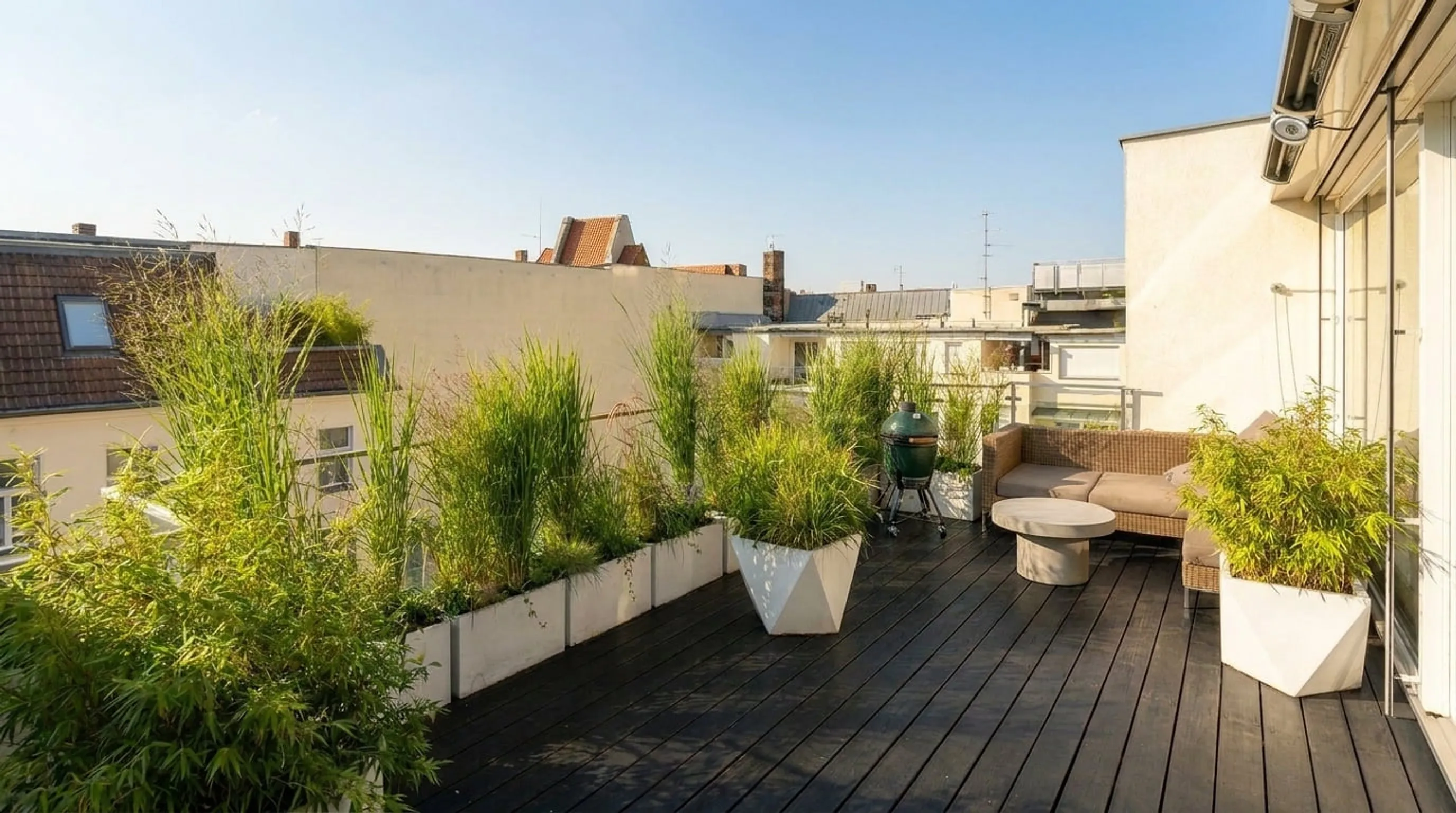
Our Innsbruck approach
Curated plants, ecological substrate, lifestyle integration
- Symbiosis methodology – mycorrhizal partnerships, effective microorganisms and humus building replace chemical fertilisation under Alpine UV stress and foehn dehydration.
- Alpinophile palette – structural specimens (mountain pine, stone pine, mountain ash, yew, hornbeam), alpine evergreens (juniper, dwarf pine, boxwood, holly), flowering accents (mountain laurel, Annabelle and Limelight hydrangea), Alpine perennials (edelweiss cultivars, gentian, saxifrage, Alpine aster), Japanese maple in protected positions.
- Wellness architecture – sunset terrace, outdoor kitchen, sauna pavilion and fire pit integration with Nordkette, Patscherkofel or Stubai framing.
- Snow- and altitude-aware execution – Tyrolean-registered architects and structural engineers, Tiroler Bauordnungsgesetz permitting, Altstadt-Heritage consent, snow-load detailing to 5,0 kN/m² (Igls and Hungerburg up to 7,5 kN/m²), foehn-resilient verankerung.
Areas we serve
Across Innsbruck and the Tyrolean alpine belt
Most of our Innsbruck work is concentrated in Saggen, Wilten, Höttinger Au, Mühlau, Hungerburg, Igls, Vill and the inner-city Old Town quarter. We also handle select hospitality and country-villa projects across the Nordkette range, in Seefeld, the Stubaital, the Wipptal and along the Achensee corridor.
How an Innsbruck project unfolds
From first conversation to handover
- 01
Understanding before drawing
Site visit (or detailed remote survey for first conversations from Berlin), discussion of the people and rhythm using the terrace, early constraint mapping (Bauamt, Altstadt-Heritage, snow load class, foehn exposure, structural capacity).
- 02
Concept and curation
A small set of plant compositions, material moodboards in regional larch and stone pine, wellness element placement. Always optionality.
- 03
Engineering and approvals
Load calculations with Tyrolean structural engineer (including snow load + foehn load cases), Stadt Innsbruck Bauamt permitting, Altstadt-Heritage consent, plus Schutzwald and Bebauungsplan compliance for Hungerburg, Mühlau and Igls projects.
- 04
Installation and handover
Our team installs on site over one to several weeks. Plants are sourced from Tyrolean and Bavarian nurseries and pre-conditioned for the Inn-valley microclimate. After handover we offer ongoing care subscriptions following the same symbiosis methodology, including a foehn-inspection in March and a snow-load check in late autumn.
Frequently asked
What clients usually want to know first
- Do you work on rooftop terrace projects in Innsbruck?
- Yes. Most of our Innsbruck work is Saggen, Wilten, Höttinger Au, Mühlau and the alpine HNWI belt of Hungerburg and Igls. We also handle select Nordkette hospitality and Stubaital country-villa projects.
- How do you handle the Inn-valley foehn?
- Foehn is planned into the pergola construction and irrigation strategy from day one. We use lamellar windbreaks that break rather than block the wind, plus mycorrhizal substrate that stabilises water uptake during foehn dehydration phases.
- How long does a typical Innsbruck project take?
- Between five and twelve months from first conversation to handover. Larger Hungerburg or Igls high-altitude estates with Schutzwald clearance often need eight to twelve months of planning.
Continue reading
All Rooftop Terrace Services
The full rooftop offering – Berlin and worldwide.
Planning a rooftop terrace – science-based
Research on stress reduction, focus and wellbeing through greened outdoor spaces.
Winter protection for rooftop terraces
Containers, plant cover and watering in winter – practical care guide.
Rooftop Terrace Design Salzburg
Aigen, Parsch and Mönchsberg.
Rooftop Terrace Design Vienna
Innere Stadt, Hietzing and Döbling.
Rooftop Terrace Design Munich
Bogenhausen, Grünwald and Schwabing.
Start an Innsbruck rooftop conversation
The first call is unhurried – understanding before any concept. We travel from Berlin for site visits when the project warrants it.
Get in touch